Yorkshire’s million-pound postcodes: Where the county’s £1 million-plus homes really are
One home in every twelve in Ilkley’s postcode is now valued at £1 million or more.
That is the sharpest finding from Garrington’s analysis of Yorkshire’s prime market, which set out to identify the postcode districts with the greatest number of homes estimated to be worth £1 million or more, and then asked a question the raw count cannot answer: where those homes are concentrated.
LS29, which takes in Ilkley, Ben Rhydding, Menston, Burley-in-Wharfedale and Addingham, leads the county by a wide margin with an estimated 1,266 dwellings. Harrogate supplies three of the ten districts, Sheffield’s western suburbs three and Wharfedale and north Leeds the remainder. York does not appear at all, for reasons set out below.
The ten Yorkshire postcodes with the most £1 million-plus homes
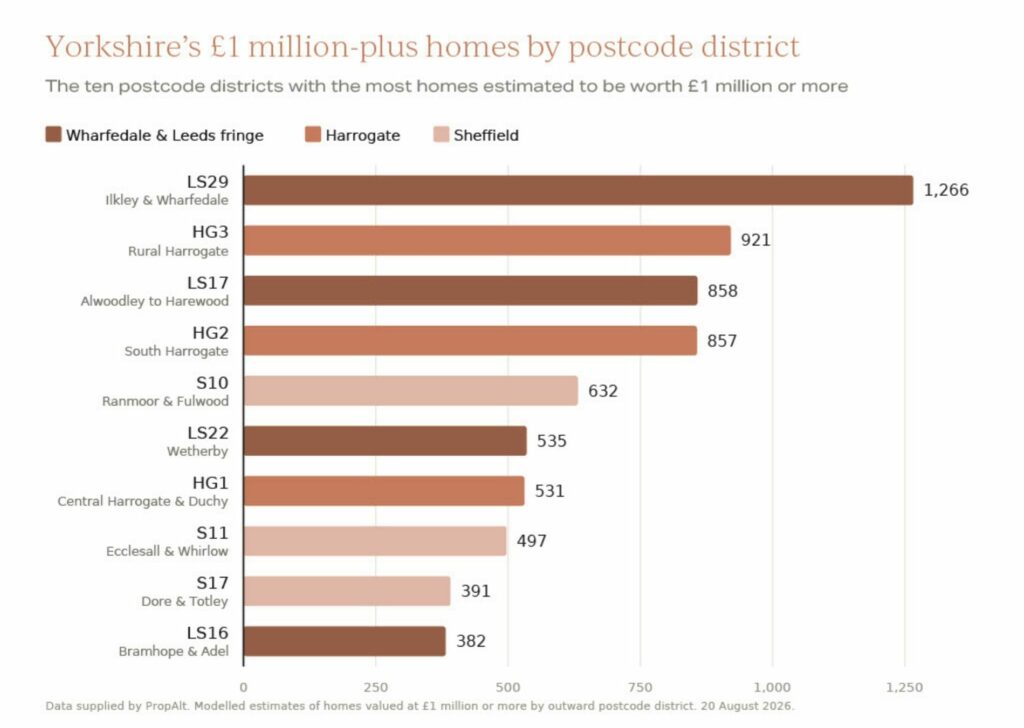
LS29 leads by a clear margin. Rural Harrogate’s HG3 follows, then LS17 and HG2, which on 858 and 857 are level for practical purposes. Sheffield’s S10 is fifth, and the numbers ease down through Wetherby, central Harrogate and the remaining Sheffield districts to LS16 at the foot of the ten.
Where million-pound homes are densest
A raw count favours large districts: LS29 has 15,790 homes, S17, Dore and Totley, 7,352. Setting each district’s million-pound homes against its total stock reorders the ten. Ilkley still leads, with 8% of LS29’s homes valued at £1 million or more. Wetherby moves from sixth to second at 6.8%, rural Harrogate’s HG3 is close behind at 6.6%, HG2 stands at 5.7%, and Dore and Totley, ninth by count, rises to fifth at 5.3%. LS17 follows at 4.4%.
The Sheffield and inner Leeds districts fall away because they are large. S10, Sheffield’s leader by count, has nearly 24,000 homes and takes in Broomhill and Crookes as well as Ranmoor and Fulwood, so its 632 million-pound houses are 2.7% of the whole; S11 stands at 3.1%, central Harrogate’s HG1 at 3% and LS16 at 2.1%. That does not diminish them; a prime pocket inside a large, mixed postcode is simply a different proposition from a district that is prime almost throughout, and a buyer should know which they are looking at.
Wharfedale and the Leeds fringe
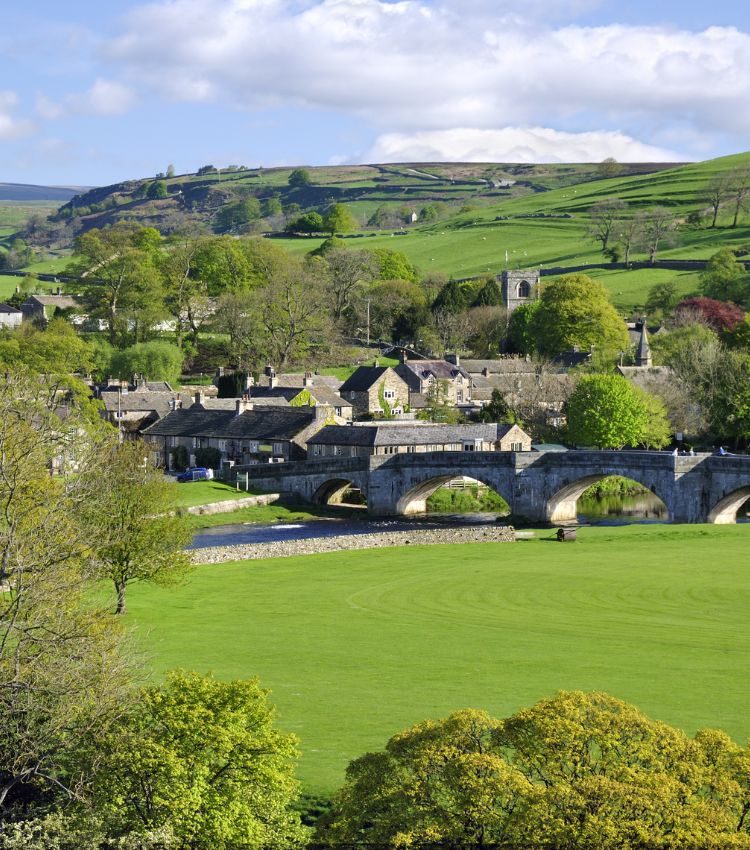
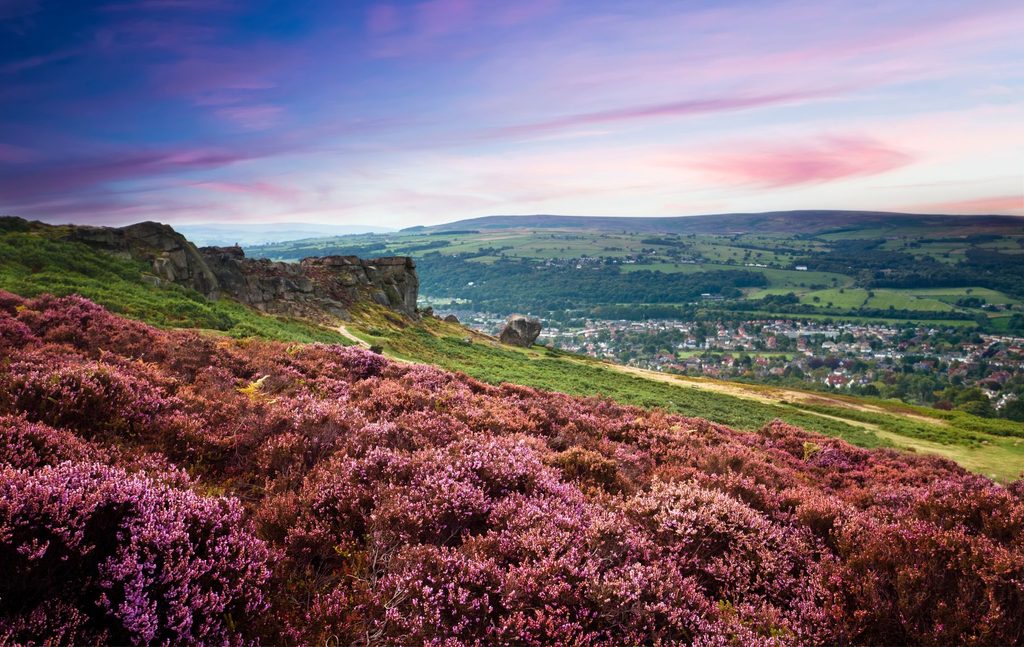
Wharfedale supplies the county’s clear leader. Ilkley is a Victorian spa town on the edge of its own moor, its stone houses climbing towards the Cow and Calf rocks, and it has a life of its own rather than serving as a dormitory of Leeds. Ben Rhydding adds larger plots and a golf course, Menston a sizeable village with its own run of substantial houses, and Addingham and Burley-in-Wharfedale trade the town for the river.
Together they give LS29 both the largest number of £1 million-plus homes in the county and the highest share.
North of Leeds, the ground shifts from dale to that of an established suburb. LS17 gathers Alwoodley, Shadwell, Bardsey, East Keswick and the estate villages around Harewood, the long-established affluence of north Leeds, with houses behind mature hedges and two of the city’s best-known golf courses. Harewood House lends its parkland to the villages at its gates.
Wetherby, east again, is racing and river country on the old Great North Road, where Linton and Sicklinghall offer paddocks a few miles from the A1; its compact district of fewer than 8,000 homes carries a higher share of million-pound houses than anywhere but Ilkley.
Closer to the city, LS16 runs through Bramhope, Adel and Cookridge, where a fine Norman church and the woods of Golden Acre Park sit within a school run of the centre. Much of this belt is what agents call the Golden Triangle between Leeds, Harrogate and York, though not every corner of it commands the same premium. The villages ringing these districts often trade at prime levels too, without belonging to the postcode that leads the count.
The Harrogate postcodes
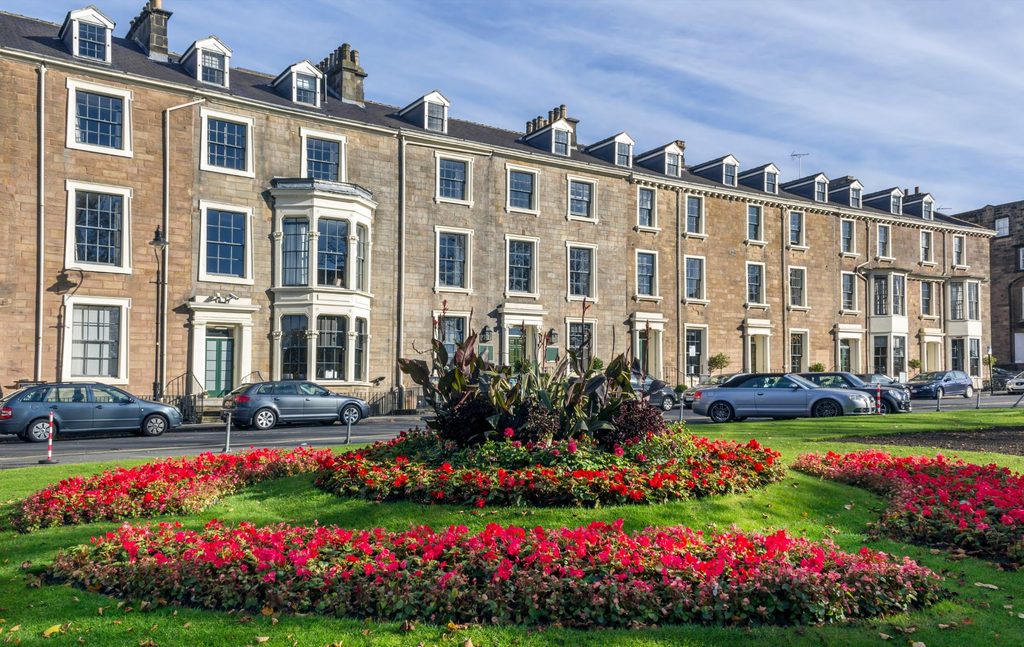
Harrogate accounts for three of the ten, each with a different character. Rural HG3 is the widest, a sweep of estate villages and open country that takes in much of Nidderdale (the former Area of Outstanding Natural Beauty, now a National Landscape).
Ripley, with its castle and cobbled square, sets the tone; Kirkby Overblow, Pannal and Follifoot keep prime family houses within reach of the town, while Birstwith and the dale villages trade proximity for scenery and a few acres.
The town of Harrogate itself divides between two postcodes. South of the centre, HG2 is the established family quarter, the leafy avenues of Fulwith, Oatlands and Rossett within walking distance of the Stray, the great arc of green that gives the spa town its shape.
HG1 covers the centre and the Duchy estate, where Victorian and Edwardian villas stand on wide tree-lined roads a few minutes from the Montpellier quarter.
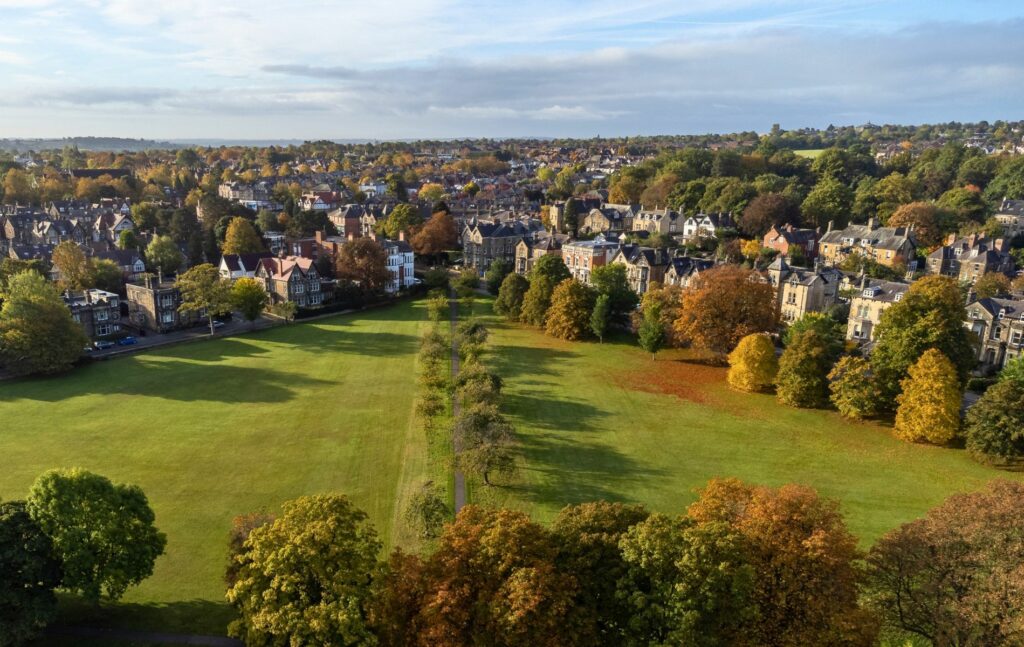
Sheffield’s western suburbs
South Yorkshire’s prime market gathers along Sheffield’s western edge, where the city gives way to the Peak District. S10 covers Ranmoor, Fulwood and Broomhill, climbing the Porter valley towards the moors with the university and teaching hospitals close at hand.
S11 takes in Ecclesall Road, the city’s café and restaurant strip, then rises into the near-rural calm of Whirlow and Greystones. Furthest out, S17 is Dore and Totley, Sheffield’s village fringe pressed against the national park, with a station that keeps moors and city both within reach; the smallest of the ten by housing stock, it ranks fifth by share.
What the three offer is rare for a major city: prime houses, mature gardens and open upland within a few miles of the centre.
What a postcode count cannot see
A postcode count answers one question well: where do million-pound homes gather in greatest number? It says nothing about a prime market spread across several districts, or about a single prime lane inside a large district that is otherwise unremarkable.
The figures are also modelled estimates of the standing housing stock rather than a census of completed sales, so they are best read as a considered guide to where prime homes gather rather than a precise headcount. The examples that follow are where local knowledge earns its keep.
York, a city spread across nine districts
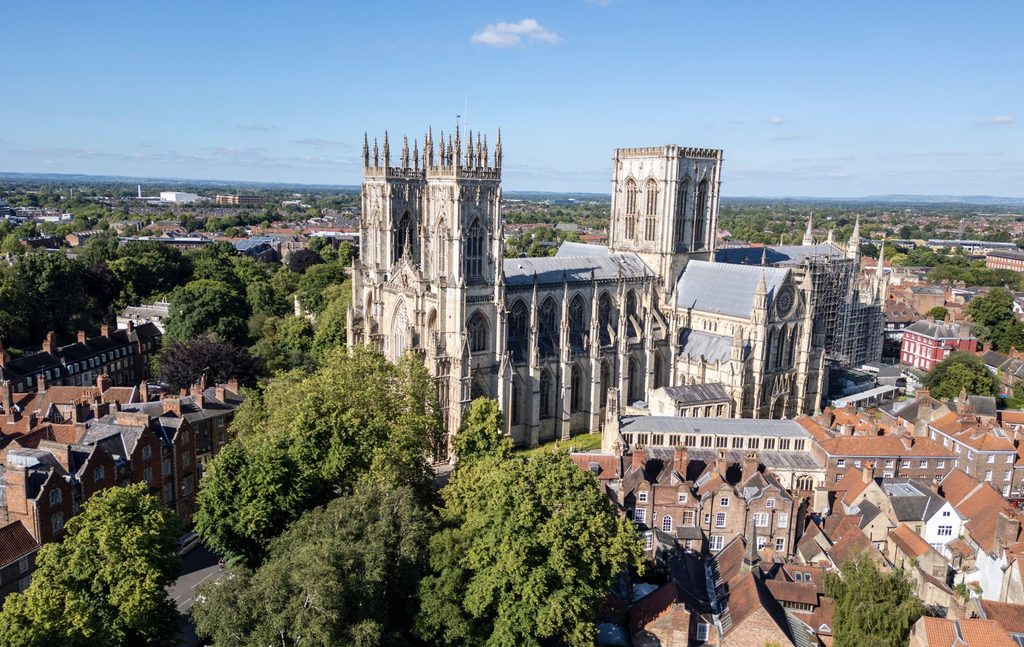
York does not appear among the top ten, and given the city’s standing that surprises people. Part of the explanation is structural: the count compares individual districts, and York’s £1 million-plus homes are spread across nine of them rather than gathered into one.
Searching for a home in York means moving between YO30 through Clifton and Rawcliffe, YO26 around Poppleton, YO24 in Dringhouses and Acomb, and the streets closest to the centre, where Bootham, The Mount and the handful of houses at Purey Cust in the shadow of the Minster are among the city’s most established addresses.
York’s strongest district, YO26, holds an estimated 220 homes over the threshold, against 382 for the district that sits tenth.
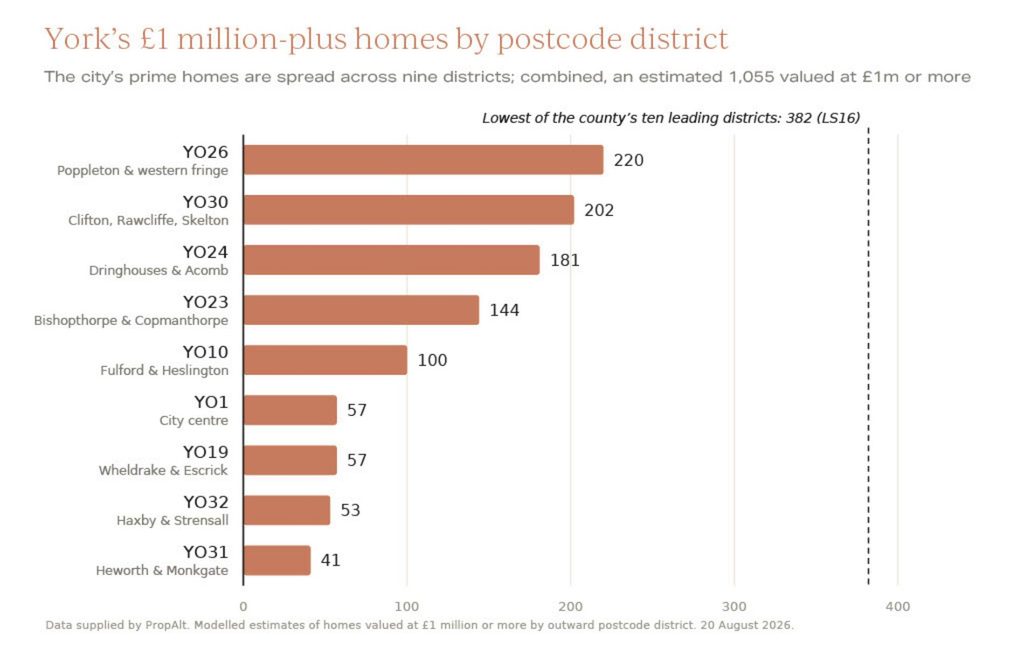
Counted together, the nine districts hold around 1,055 homes valued at £1 million or more. That is a substantial prime market, though not the deepest in the county: Harrogate’s three districts hold 2,309 between them and Sheffield’s western three 1,520.
Scarcroft, and the lesson of Ling Lane
Scarcroft shows the opposite distortion. It sits in LS14, a district of more than 18,000 homes that is mostly Seacroft, Whinmoor and Swarcliffe, and whose overall figures would never mark it out. Yet LS14 holds an estimated 308 homes valued at £1 million or more, not far short of the tenth-placed district, and anyone who knows the area will place them in Scarcroft and neighbouring Thorner rather than on the city estates.
The substantial houses on generous plots along Ling Lane are exactly the kind of prime pocket a district figure dilutes to 1.7%. The detail is at street level, and no table shows it.
The Dales, Ryedale and the Wolds: country markets spread thin
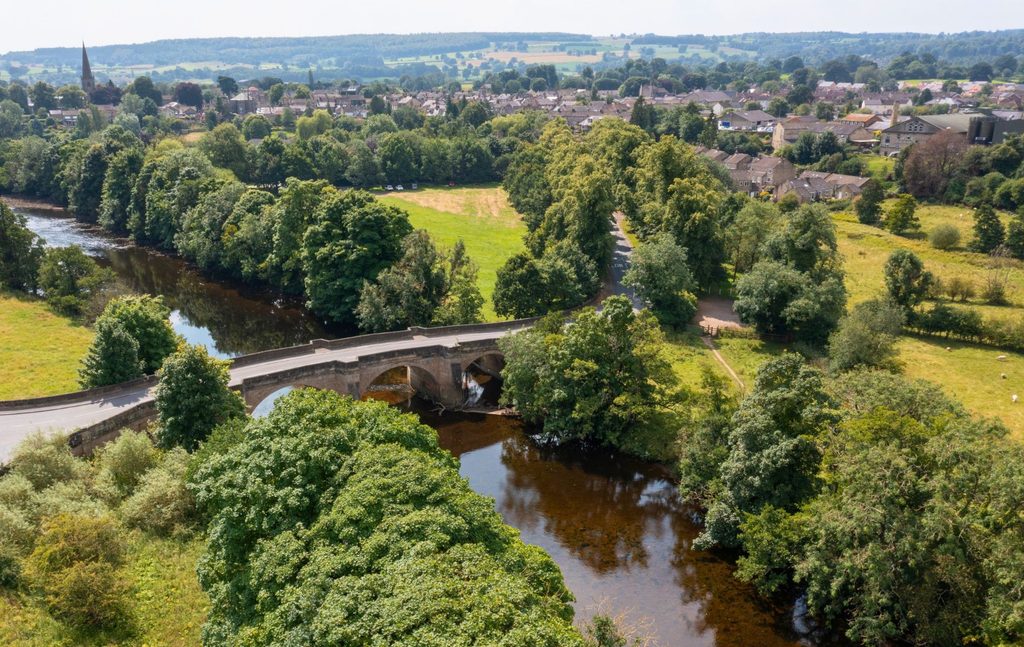
The county’s rural prime markets are spread too thinly to register in a district count, and the numbers show how thinly. Skipton and Craven (BD23) hold an estimated 244 homes over the threshold; Ripon and Masham (HG4) 199; Easingwold and the Howardian Hills (YO61) 176; Helmsley and Ryedale (YO62) 167; Beverley and the Wolds (HU17) 133; Malton and the Castle Howard villages (YO60) 95; Leyburn and Wensleydale (DL8) 45.
Each is a serious market for country houses, barn conversions and estate villages (the stone houses around Masham and Leyburn, the villages scattered towards Skipton and Reeth) with the finest houses miles apart. None comes close to the ten, and none is weaker for it: demand for the right house in Ryedale or Wensleydale is as firm as anywhere in the county. What is scarce is the house.
The coast, where the threshold is rarely crossed
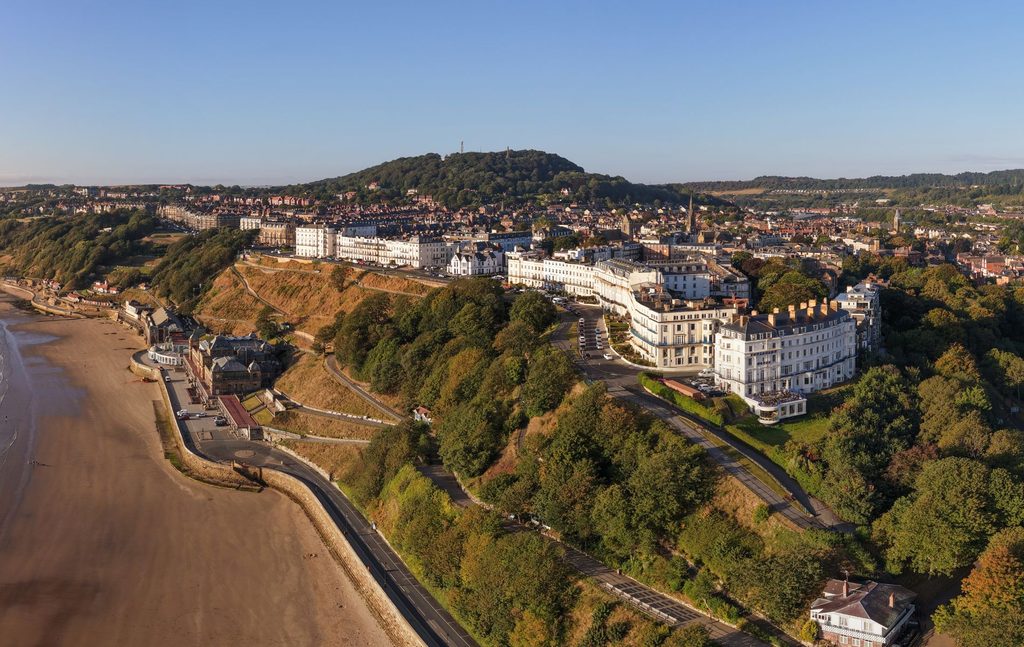
The coast is different again, and the figures explain why. Across the four districts from Scarborough to Whitby, YO12, YO13, YO21 and YO22, there are an estimated 54 homes valued at £1 million or more in total. The cliff-top houses and scarce sea-view homes between Sandsend and Robin Hood’s Bay command the highest prices on this stretch, and Scarborough’s North Bay has a following of its own, but most of that market trades below £1 million.
Boutique coastal developments have joined the older stock, and behind it all the North York Moors give the shore a hinterland few English seaside markets can match.
Coastal demand is driven by view, aspect and scarcity rather than commute or catchment, and by second-home buyers as much as year-round residents, so it sits awkwardly beside a measure built on inland stock. It is a market we watch closely, and one where the handful of homes above the threshold understates the interest just below it.
The £1 million market this autumn
Scarcity is the defining feature of these ten districts. Of the 6,870 homes across the ten now valued at £1 million or more, around 150 changed hands in the year to June 2026, a little over 2%, roughly one home in forty-five. The most active districts were HG2 and LS29, with 28 and 27 recorded transactions; Dore and Totley recorded three, Bramhope and Adel five. Most owners of these houses are not sellers, and some of the best change hands without ever being openly advertised.
As at 18 September 2026, around 210 homes are listed at £1 million or more across the ten districts. Supply is uneven: 45 in rural HG3 and 39 in LS29, but only 9 each in S10 and S17 and 6 in S11. Set against the pace of recorded transactions, that is more than a year’s supply in rural Harrogate and only a few months’ in S10, and it is why the approach differs from one postcode to the next: in the Sheffield suburbs a buyer waits for the right house and then moves quickly; in rural Harrogate there is choice, and the judgement is which house, and at what price.
Buying the best house in a strong postcode
A strong postcode tells you the market has already decided an area is desirable. It tells you almost nothing about whether a particular house within it is worth the premium you will pay. Two homes on the same street, in the same postcode district, can differ widely in aspect, plot, position on the road, ceiling height and light.
The postcode gets you to the right area. Judging the house is separate work, and harder, and it is where we spend much of our time. Is the house on the favoured side of the lane? Will the view survive whatever might be built on the field behind it? And is the premium in the asking price attached to the address, or to the house itself, measured against what similar houses have actually achieved nearby?
That is the work of a property finder. Garrington acts for the buyer alone: we search the whole market, including houses that are not openly advertised, assess each against your brief, and negotiate price and terms on your behalf. The aim is not to tell you which postcode to want, which you probably already know, but to make sure that within it you buy the right property at the right price.
Decided street by street
Yorkshire’s million-pound market is decided at the level of streets, villages and single lanes. The figures show where the county’s prime homes gather in greatest number and where they are densest, from Ilkley and Wetherby to rural Harrogate and Sheffield’s western edge, and they correct some received wisdom about where prime property sits.
They are the starting point for a search, not the end of one. If you are considering a move into one of these locations, or into a prime pocket the count passes over, we would welcome a conversation about the current market and how to buy well within it.
Julian Rich leads Garrington’s Yorkshire searches, and you can reach the team through our contact page for a discussion in confidence and without obligation.
Methodology
The data in this article are modelled valuation estimates supplied by the property data firm PropAlt and analysed by Garrington. For each outward postcode district in Yorkshire they record how many residential dwellings are estimated to be worth £1 million or more, and the total number of dwellings, from which each district’s share is calculated. York is taken as the nine districts YO1, YO10, YO19, YO23, YO24, YO26, YO30, YO31 and YO32. Transaction counts are Land Registry completions recorded in the twelve months to 30 June 2026 for homes currently estimated at £1 million or more; because the £1 million test is applied to the current estimated value rather than to the price paid, they measure turnover within the £1 million-plus stock and are not a count of sales achieved at £1 million or more; homes for sale are those listed at £1 million or more at the date of analysis. The figures are modelled estimates covering the whole housing stock rather than completed sales, and are best read as the picture at the date of extraction. The £1 million-plus counts were extracted on 20 August 2026 and re-verified on 18 September 2026, when the total dwelling counts, shares and district comparisons were also drawn; transaction counts cover the twelve months to 30 June 2026; listing counts are as at 18 September 2026.